


Twenty-Ninth Sunday in Ordinary Time
Year A | 18 October 2026
Sisters & Brothers,
Greetings from Papua New Guinea!
Last week I had chance to visit the highland region where I served some years ago. On 13 October, the anniversary of the last appearance of Our Lady at Fatima, there took place the blessing of the National Marian Shrine dedicated to Our Lady of Fatima. The Shrine was blessed by Cardinal John Ribat, the first and only cardinal of PNG. The ceremony was witnessed by more than eight thousand people from many provinces of the country.
The blessing of the Shrine was celebrated for five days. From Friday people had many traditional dances, called singsing, with painted faces and decorated bodies which represent the richness of PNG cultures and traditions. One day was dedicated for the traditional meal prepared from pigs, called mumu in Tok Pisin, or New Guinea Pidgin language.
The blessing of the Marian Shrine once more was an opportunity to witness harmony and cooperation of the Catholic faith and local traditions.
Have a blessed week,
Fr. Bogdan

Twenty-Eighth Sunday in Ordinary Time
Year A | 11 October 2026
Sisters & Brothers,
Some people say that if you share your problem with your friend, you have halved if. If you share your joy with others, you multiply it. Maybe you have similar experience; maybe it happened to you as well. Especially, when we say about joy, I had it twice; first when I got a present for Christmas or birthday and the second time when I could show it to my friends.
I was happy to show them what I got, and I felt I was important to my parents. Everyone likes to share joy with their friends and to feel supported by them.
Today Jesus says the parable about the King and the wedding banquet of his son. He invited those who were the most important to him, some nobles, some neighbours and friends. He invited them not only to have dinner and food; not only to dance and have fun. He wanted to share with them his joy that his son, the pride of his life, was getting married. But people did not care. They ignored the king and his invitation. They were not interested in his son and the banquet he prepared. All invited had ‘better things to do’. By ignoring an invitation, they disrespected the king.
God is the king of the world but even more He is our loving father. He prepares wonderful banquets for all his children, for all of us. He prepares gifts he wants to give to us. God has given us life and talents, and the wisdom to know how to use them. But more importantly God has Sacraments, salvation and eternal happiness in his presence in Heaven. God wants to share his joy with us.
Are we interested in that? Do we want to witness God’s generosity and joy? Many times, we are like the invited guests from today’s parable. We know the king, we know his son but we do not have time to share his happiness. We believe in God, we know Jesus Christ and even his teaching and the Gospel. Yet, we are too busy, like the king’s guests, to share time with our Creator.
How many times do we find good excuses to postpone or omit completely our prayer, Sunday services and our meeting with God. One day we feel excused because we are too tired to pray, next time we are too busy, another time we have an important event. We can always justify our actions.
Let us reflect today on how important God is to us, and on how we treat him and what can we do better. Let us not be just invited, let us share the joy of God.
Have a blessed week,
Fr. Bogdan

Twenty-Seventh Sunday in Ordinary Time
Year A | 4 October 2026
Sisters & Brothers,
Most people have heard the story of Julius Caesar and Marcus Brutus. Maybe you studied this case in history classes or maybe you read “Julius Caesar” by William Shakespeare. Julius was a good friend of Brutus’ mother and his family. Julius treated Brutus like his adopted son. For years they were very close friends. Even when Brutus was joining Caesar’s enemies, Julius pardoned him and even gave him an important position, the judicial office in Rome (Praetor Urbanus). But after receiving friendship, adoption and privileges, Brutus betrayed Julius Caesar and killed him. The blows dealt by friends are the most painful ones. It is the biggest disappointment to discover that the person you loved and trusted turned out to be your enemy, to be the one who stabs your back - when your friend becomes Brutus.
Today Jesus says a parable about a vineyard and its owner, a story about a landlord and the tenants who looked after his field. A man invested a lot of his time, money and skills to create the perfect vineyard. He loved it like his own baby. Finaly, he leased it to people he knew and he could trust. But he learned very quickly that for tenants, grapes and money from the vineyard were more important than friendship and loyalty to the landlord. They knew what they owe to the landowner, but their greed was bigger than their friendship. Tenants preferred money to loyalty, the fruits of the land to honesty.
People who listened to Jesus knew that the parable is about God and them. They understood that God who created the world and every person in the audience, invested so much of his love to create the beautiful world – Eden – where people could live happily and enjoy God’s friendship forever. That God created everything and gave it to them to make their lives beautiful. God gave them everything and ask them just for one thing – to bring the proper fruits. But people did not want to be tenants; they wanted to be the owners of the vineyard. They betrayed God to follow their own greed.
We know how much we owe God. He created us and adopted us as his daughters and sons. We know how much God invested in us. He sent his beloved Son to die for us and to save us. God gave us life, friendship and the grace of God’s children. But like Brutus we betrayed our Father who adopted us, shared his love with us and promised us the place in his Kingdom. We are ‘Brutus’s’ every time we betray God by our wrong decisions; whenever we choose other things to God.
Let us pray today to have enough strength to be loyal to our God and his love. That we never be like Brutus and never betray him.
Have a blessed week,
Fr. Bogdan

Twenty-Sixth Sunday in Ordinary Time
Year A | 27 September 2026
Sisters & Brothers,
The world knows many great scientists from human history. People like Nicolaus Copernicus, Isaac Newton, and Albert Einstein made great discoveries and put huge stones in human development. Their discoveries help us to understand better the world around us, even the laws and rules that govern the universe.
But even these great scientists, the extraordinary minds of their time, made mistakes. They had to make adjustments to their theories and mathematical calculations. They knew and understood their limitations. They were able to acknowledge their errors. This is the sign of a good scientist and this is the sign of a good person – to admit his/her mistakes. Humility is necessary to make progress and new discoveries in science.
Today Jesus tells the story about two brothers, who should help their father. Same request, but two different answers and two different actions. One of the brothers satisfying the father by his words, and the other one actually fulfilling his request. It was obvious straight away to Jesus’ listeners. They knew who of these two sons followed the father’s will. Promising things without intention of fulfilling a promise is not valued at all. Did the second son change his mind, or from the beginning did he not have intention to go to the vineyard? It is not important; simply, he did not follow the father’s request. On the other hand, the first child, who did not want to work, changed his decision. He ‘thought better of it’, had some reflection on the father’s words and went to the vineyard. This man was able to have self-reflection and acknowledge his mistake.
There were many great scientists in history. But only the humble ones are remembered. Those who could see or admit their mistakes, they could make changes in their theories, calculations and discoveries. The proud scientists wasted their talents and energy to defend something that was incorrect.
Let the Gospel of today help us to reflect about our own mistakes and errors. Maybe for years we believed in incorrect ideas? Perhaps we made a few wrong decisions? Maybe we turned in the wrong direction? Let’s admit our mistakes before we go too far on the delusional way.
Today Jesus encourages his listeners to acknowledge their sins and faults. Because God is able to forgive all our mistakes. Even we are ‘tax collectors and prostitutes’, we can be forgiven. But only if we confess our sins. First, we need to admit them to ourselves. Later, to tell our mistakes to God. Only God is perfect. We have rights to make mistakes and a right to fix our spiritual faults.
Have a blessed week,
Fr. Bogdan

Twenty-Fifth Sunday in Ordinary Time
Year A | 20 September 2026
Sisters & Brothers,
Reading books by far-left writers like Karl Marx and his followers, we can often see ideas of equality of payment. They believe that people should have the same salary, that everyone deserves the same payment because people of all social classes are equal. Growing up behind the Iron Curtain, many times I heard a slogan that people have ‘equal stomachs’ so they need ‘equal salaries’ to fill their hunger. Interestingly, communists and socialists did not mention the difference in people’s efforts, hard work and achievements. Lazy and incompetent people and the hard-working ones were treated alike. I do not feel justice in that. Naturally we feel that the harder you work the more you achieve. Equal does not need to mean justice.
Today’s Gospel says a beautiful and interesting parable which Jesus told us and his disciples. Jesus said the story of the hired workers who work for different amounts of time in the vineyard. Some of them work for twelve hours, some for six but a few worked just one hour. At the end of the day every worker got the same money - one denarius. Can we feel that something is incorrect in that situation? Do we sense some injustice? Surely, we do. A person who works harder should be paid better. It is common sense. Only Karl Marx did not understand it.
Jesus is not a communist. He is a Messiah, the Son of God. He talks to us about his Father and his love. Today Jesus provoked his audience and their sense of justice. By his story Jesus forced his listeners to think deeper and to try and understand his hidden wisdom. He knew that people would discuss what that parable could mean and what he tried to tell them.
Jesus did not tell a story about social injustice; he did not talk about unfair wages. Jesus said about his Father’s love. God offers his love to every person. A very full and pure love. He cannot offer anything less. God is not able to offer us less than a whole ‘denarius’. He will not offer us fifty, thirty or ten per cent of his love. It is not possible. God gives us his whole love, full forgiveness, a whole ‘denarius’.
On the other hand, God is not able to give us more. He cannot double his love or increase his forgiveness. God already gave us everything, he gives us the best he can.
Reading today’s parable again, let us remember that God is not a vineyard owner; he did not treat us as hired workers. But God is not a communist or a social justice advocate who supports equal salary for all. God treats us as his children and he has equal love and compassion to his every child. As the grateful children let us enjoy God’s love, the ‘denarius’ his gives to us.
Have a blessed week,
Fr. Bogdan

The Triumph of the Cross
Year A | 13 September 2026
Sisters & Brothers,
For millennia people have celebrated important days for individuals and for their whole community. At the beginning they observed the new seasons and changes of time and later enjoyed harvest festivals and similar events. Many countries commemorate the coronation of their kings, anniversaries of battles or the ending of wars. These celebrations support people to build community and their specific identity. These ceremonies helped them to have common values.
As individuals people celebrate too. We have our birthdays or name days, wedding anniversaries and many others. Sometimes these special days encourage us to stop and reflect on the importance of our lives. In the Church we have many special and important days as well. The most significant is Easter and Christmas. But we have many more.
Today as a Parish community we celebrate the most important day for us. Today we commemorate the Exaltation of the Cross, the name or title of our Parish. To commemorate this day is essential to us, because this title shapes our faith identity. For many people the cross is a symbol of suffering, pain and trauma. Any disadvantage, difficulty or problem people identify with the cross. Many want to avoid a cross as much as they can. They do not see any positivity in the Cross.
We as believing Catholics, the disciples of Christ and the parishioners of Holy Cross Parish, have to see the sign of the cross from a different perspective. Firstly, the Cross is a sign of God’s love for us. Without love the cross would have no sense at all. It would be just pain and misery. In the Cross, God shows that He can do anything for us.
Secondly, the Cross is a sign of Jesus’s sacrifice. He accepted the Cross to save us, to help those who could not help themselves. Jesus gave up his life because he was thinking of us, not about his own comfort.
Finally, the Cross is our Salvation. In this sign we were saved. Jesus dying on the Cross gave us a second chance to be forever with God. There are values of the Cross. Today’s commemoration of the Exaltation of the Cross is a good opportunity to reflect on these values, accept them as our own and try to live by them every single day.
Today we also celebrate the Sacrament of Confirmation with our young parishioners. Today these young people are going to say that they confirm that they believe in God, they still want to be the friends of Jesus, and they understand the values Jesus showed us on the Cross.
As parishioners of Holy Cross Parish, let us celebrate the Solemnity of the Exaltation of the Cross. Let us learn to love the Cross like Jesus did try our best to practice its values in our daily lives.
Have a blessed week,
Fr. Bogdan

Twenty Third Sunday in Ordinary Time
Year A | 6 September 2026
Sisters & Brothers,
Peace is a dream for many people. We wish for a ceasefire in every corner of the world to give a peaceful time to everyone. Unfortunately, every day the evening news reminds us about many uneasy places. There has been a war almost for five years in Ukraine, we see another one in Iran. There are many local conflicts in African countries and in South America. In fact, since the Second World War there has been no single day of peace in the world. There is constant conflict between nations, tribes and ethnic groups.
There are many tensions between nations. There are tensions between Christians as well. Many people idealistically think that there should not be problems in Christian communities, between people following Christ. People believe that Church communities should be perfect, without disagreements or differences in opinions. Many suppose that Christians should be as holy as Christ.
We would be naïve to believe that. We believers are just weak people; we are no better than any other humans. We have our weaknesses and pride; we have our emotions and feelings. We are just people. God knows that. He knows our condition. Jesus knew the weaknesses, ambitions and desires of his disciples. He knew who wanted to sit at his right side in the Kingdom.
Today, Jesus gave his Apostles the solution to stop all conflicts; it is dialogue, forgiveness and mutual love. Jesus asked them to see a ‘brother and sister’ in every person. Nobody should be seen as an enemy. As disciples of Christ, we should follow the same path. We need to pray for wisdom and courage; wisdom to find the proper words to finish conflict, and courage to face the person we disagree with.
It is not easy to talk to people we disagree with, maybe even who we are upset with. It is difficult but recommended by Jesus himself. Not gossiping, not whinging, but simply to talk to people, to have dialogue.
As Christians we have forgiveness and mutual love. If we do not practice them, we are no different from any other group, like a ‘surfing club’ or ‘bicycle association’.
Peace in the world is our dream. Let’s start to practice it on the lower level; we can start with our families, friends and parishes.
We cannot be naïve and believe that we can create ‘heaven on earth’. People always will have their own opinions and arguments. Even in the Church. We can see things differently, to have different views. And we are still brothers and sisters in Christ. No one is an enemy.
To be heard by God, to have Jesus present in our parish, let us pray together with the brothers and sisters who sometimes have a different worldview than ours.
Have a blessed week,
Fr. Bogdan

Twenty Second Sunday in Ordinary Time
Year A | 30 August 2026
Sisters & Brothers,
Catholics do not believe in destiny. Nobody is destined to be poor or rich. Nobody is destined to have a good or bad life. We do not follow John Calvin’s idea of predestination, where God at the beginning of time preordained some people to Heaven and others to be eternally condemned. According to Calvin, people have to commit sins or do good deeds because God decided so. God decided before the world was created.
The teaching of the Catholic Church is different. We Catholics believe in free will; we believe that God offered us the gift of free choice. We decide, and we take responsibility for our choices.
Today we meet Jesus who is walking to Jerusalem. It is the city of his destiny. It is a place where Jesus will suffer from the Jewish authorities and the place of the hill where he will die.
Jesus was sent by his Father to redeem the world. He was born by Mary, lived in Israel and died in Jerusalem. It was God’s plan. It was Jesus’ destiny. But Jesus was not determined to follow God’s idea; he could change his fate. From the biggening Jesus had a free choice to accept and follow his Father’s plan or not; to agree what he was asked to do, or to have a different idea.
Jesus accepted God’s plan, he agreed to “suffer grievously” and “to be put to death”, not because it was his destiny or that he had no choice. He agreed because it was the only way to redeem the world; to save every one of us.
In his free will Jesus accepted that ‘destiny’. His love for us forced him to the Cross and to sacrifice his life. It was Jesus’ choice; it was his decision. Jesus could save his life for himself or to sacrifice it for us. He chose to redeem us.
God has plans for all of us. He wants us to be with him in Heaven. He even sent and sacrificed his only Son to help us. At the same time, he gave us free will, and a free choice to accept his ideas or to reject them. Nobody is ‘predestined’ to be a sinner or to be a saint. It is our choice. But if we choose to follow him, we have to accept the cross too. It is the only way. If there were other options, Jesus would tell us.
If you want to have heaven as your destination, you have to choose it first. Jesus showed us the map to heaven and gave us a tool. It is his Cross. Let us take up his Cross. It is the way, it is a key to the heaven’s gate.
Have a blessed week,
Fr. Bogdan

Twenty First Sunday in Ordinary Time
Year A | 23 August 2026
Sisters & Brothers,
Tu es Petrus – which means, you are Peter, you are a rock (Petra means rock in Greek). Simon you are Peter; you are the rock and on you I will build my Church. These words of Jesus to Simon Peter changed a lot. Firstly, they shaped the Twelve Apostles, the close friends and disciples of Jesus, and secondly, they changed Peter, who became the leader, the first of the other Apostles.
Jesus’s words show something else. People say that they believe in God, in his existence and in his goodness. But God believes in man too. Jesus believes in Simon that he can be Peter – he can be a rock. Jesus who knew Simon Peter, a fisherman, a simple but hard-working villager, a man who can be a hot-tempered person. But choose him to be a rock, a leader, a pillar of his Church. Jesus knew Simon Peter and all his weaknesses and limitations, but it did not stop him to make him the ‘first Pope’. Jesus did not choose a saint; he was not seeking a perfect man. Jesus decided to choose Simon Peter, an imperfect man whose heart was fully dedicated to his teacher.
God chooses weak people to be the shepherds of his flock. It is good to remember that, when we think about the history of the Church, especially when we think about the leaders of her. Over the last two thousand years, the Church has had many different leaders. Some of them were very well educated and virtuous people; many of them were far from being the best example for others. But the majority were average and ordinary men, like many other followers of Christ. But they were chosen, like Simon Peter was. Not because they were better than others, but because it was Jesus’s choice.
For two thousand years Jesus guides his Church through sinful and weak people. The sinful leaders, like Simon Peter. For two thousand years Jesus chooses ordinary people to guide his Church. He wants them not because of their bright intellect or the sanctity of their life, but because they were able to profess ‘you are the Christ, the Son of the living God’. They believed in God and God believed that they can be good tools in his hands.
Jesus had Twelve Apostles. Everyone was special in his eyes. Everyone had a different role and all of them were helpful. They proclaimed the Good News to the world.
Jesus calls all of us to be his ‘Peters’, to be his rocks; strong and stable. We should be the rocks of faith to our children and families. Let us be support for them. We should be the rock for our friends and the church communities. Let our faith help them to believe.
Tu es Petrus – you are Peter. You are a rock. God believes in you.
Have a blessed week,
Fr. Bogdan

Twentieth Sunday in Ordinary Time
Year A | 16 August 2023
Sisters & Brothers,
The Assumption of the Blessed Virgin Mary, which we celebrated on Friday, reminds us of the truth that Jesus took his Mother to Heaven. Jesus wanted his Mother to share the joy of paradise with him for eternity. She was important to him on his earthly journey; he wants to be with her in Heaven too. Mary sacrificed so much for him, starting from Bethlehem and running away to Egypt, and finishing with her accompanying Jesus at the way of the Cross and witnessing his crucifixion. She was his first teacher and a friend in his life.
Mary, like any mother, was ready to do anything to protect her Child and support his mission. Today in the Gospel we meet another mother, a Canaanite, whose daughter was not well, the mother of a girl ‘tormented by a devil’. How much time did she spend to help her child? How many doctors did she meet? How much money did she spend to help her daughter? Probably a lot. After looking for all possibilities, the Canaanite woman came to Jesus. He was her last hope, her last chance. Like any mother, she was ready for any sacrifice. She would not easily give up. She did not care what people would say, she did not listen to people who tried to silence her. Even Jesus’ silence did not stop her. The woman was not worried by embarrassment and was ready for any humiliation. She had only one goal: to help her daughter. Her faith, persistence and determination won Jesus’ grace and a cure for her child. A mother does anything for her child.
On the weekend of the Assumption of the Blessed Virgin Mary, we want to remember that Mary is not only Jesus’ Mother, but she is a mother for us as well. It means that our mother is already in Heaven, next to Jesus to support us by her prayers. Today, Jesus was not able to refuse and reject the plea of the Canaanite woman, a desperate mother who begged for health for her daughter. If Jesus could not walk away from a stranger from Tyre and Sidon, surely, he will not dismiss his Mother’s request; he cannot say ‘no’ to his mum.
Let us remember that when we pray and let us think about it when we are in need. Sometimes we even do not dare to ask God for any favour because we know we are sinners. But always we can ask our heavenly Mother to pray for us, to ask and support our pleas.
The young girl was cured by Jesus from her pain because of her mother’s prayer and determination.
We can be sure that if we ask Mary, our Mother, she will ask Jesus for us and with her support, our prayers are always heard by God.
Have a blessed week,
Fr. Bogdan

Nineteenth Sunday in Ordinary Time
Year A | 9 August 2026
Sisters & Brothers,
The 8th of August is the day when we celebrate the feast of Mary MacKillop, the first and, so far, the only Saint from Australia. We remember her even more in Kincumber, where she started a ‘House for Boys’ and where she herself spent lots of days. Probably till today there are families in the Parish whose ancestors met that Saint sister and knew that she prayed in our church.
St. Mary MacKillop was a woman who, in the difficult times, had heart and time for people in need, especially children from poor families. The nineteenth century was not easy for Australia. There were six British colonies with different ideas and policies. After the ‘Gold Rush’ in 1851, Australia was full of poor immigrants who believed that Australia could be their ‘Promised Land’. In the unstable moments of history, as peoples and countries we need people who have courage and think differently.
In today’s Gospel we meet Peter who had courage to leave the boat in the middle of the lake. Peter, who was struggling and scared like the other Apostles was able to overcome his natural fear, when he saw Jesus. He did not care about the storm and the deep water anymore. He knew that with Jesus everything is possible. Even walking on the water.
When others saw the ‘storm’ and the ‘deep lake’, when people saw problems, Mary MacKillop saw people she could help. She knew and believed that she would not walk on the water by herself. She believed that Jesus would walk with her. Was she scared of the new challenge? Was she anxious about how the new order would work? Probably she was. Maybe she spent many sleepless nights in prayer. But it did not stop her walking out of the boat, of her safety zone. Like Peter, she walked toward Jesus.
The courage and faith of St. Sister Mary MacKillop benefited many people. Many children who would not have any chance of an education, had a better life because of her decisions. When Peter left the boat, probably many of his friends said that it is not possible to walk on water. Similarly, many people doubted that in the nineteenth century a single woman could change the shape of a new country, that she could transform and improve the education system of the State.
There are moments in our lives, when we can say and believe, that our dream never would be able to become true. But on these days, we should look at St. Peter who walked on the water, and we should remember St. Mary MacKillop, who inspired people for generations. In these moments we have to remember that things can be difficult. Sometimes very difficult. But with Jesus everything is possible. If you find courage and faith to leave the boat, you will walk on the water.
Have a blessed week,
Fr. Bogdan

Eighteenth Sunday in Ordinary Time
Year A | 2 August 2026
Sisters & Brothers,
There are days when we are tired and fed up with everything. The world rushes, and everyone near us does as well. In these moments when we do not have the energy to cope with all our problems and expectations, we dream to drop everything and move to the middle of nowhere. We wish to leave everything and everyone and to be in a quiet, peaceful and cosy place. In these difficult days we dream to be alone and far from everyone. It would be a great time to rest, pray, read and recharge our spiritual batteries. Sometimes we wish to be separated from this noise, from all these problems.
When Jesus heard the news about John the Baptist’s death, he left the noisy town and went to a deserted place. He was not scared; he did not run away. He needed a quiet place to pray, to talk to his Father and find peace in his heart. Jesus wanted to be alone, to understand his own mission and prepare himself for the challenging moments, when, like John, he will have to give up his life. Jesus needed to be alone, he needed a quiet space. But can God hide from people who need him? Can God be deaf to the cries of his children?
Jesus could not hide from his followers; he was not able to disappear from the crowd. People knew where he can be and joined him in that place.
Jesus was tired, he needed a silent space. But he could not turn away from people. Instead, Jesus ‘took pity on them and healed their sick’.
Reading today’s Gospel we can learn two things. Firstly, we can see that God is never away from us. Maybe sometimes we feel or think that God withdrew to ‘a lonely place’, but he never separates himself from us. Whenever we need him, whenever we are looking for him, God allows us to find him and is ready to heal our problems. As Jesus saw all the needs of the crowd who followed him on that day, he sees our necessities as well. Let us remember that when we pray.
The second lesson we can take from Jesus to try and implement in our lives, is his compassion. After the dramatic death of John the Baptist, Jesus needed time for himself. But his own comfort was never his priority. In fact, to serve and see the problems of others was the most important thing to him. Today, Jesus welcomes people and invites them to his own space. He shares his time with people and helps them in their need
Let us learn from Jesus to prioritise the needs of others. Let us, like him, be compassionate and open to help people. There is nothing wrong with having a break and rest. Sometimes we need it. But we never should have a holiday from being kind, caring for others, and helping those in need.
Have a blessed week,
Fr. Bogdan

Seventeenth Sunday in Ordinary Time
Year A | 26 July 2026
Sisters & Brothers,
A free choice is one of our most important rights and a privilege at the same time, to every single person. We love to choose, select, pick out… We want to know that we can make decisions and that nobody can take these rights from us. On the other hand, to make the right choice is not easy at all. The world is not black and white. There is lots of grey in between. We do not choose between good and bad or decide what is morally acceptable and what is evil.
Many times, a free choice does not look like a privilege but like a difficult duty, because we have to choose between two good things and it is hard to see a better option. Both look bad.
What to choose? What is better - go to school, study medicine and help thousands, or be loyal to disabled elderly parents, give up school and stay home? Is it better to choose the priesthood, be a missionary and help people in need, or to be married, have a beautiful family and live with your relations? In an accident, whom to help first – a child who has the chance to survive or the adult who is promising? Every person has their own dilemma; everyone has to make decisions. In that moment, free choice is not a right. It is more like an obligation. We cannot run from it.
Today Jesus tells the story about two men. They were not poor. One of them was able to buy a new field, and the second one had a collection of pearls. It means they had stable and secure lives. Did they need to risk everything for their new investment? Did they need to have something new? Their lives were good, but they found something better.
It is easy to choose between good and evil. But the readings of today teaches us that God helps us to choose between a good option and something that is better. Like King Solomon, we should pray to God that he shares with us his spirit of good judgment and understanding. Our choices should not only focus on what is better, but they have to be selfless and good for one another as well.
The freedom of choice which God gave to us is not only our right. God gives us freedom, but it demands responsibility for our decisions, to have courage to face the consequences of them.
We have our smaller and bigger dilemmas. We have to make decisions and choices. Let us ask God that he always helps us to choose wisely and like the two men from today’s Gospel we see the hidden treasures of God. Let us pray for God’s wisdom and understanding that the gift of free choice we use with prudence.
Have a blessed week,
Fr. Bogdan

Sixteenth Sunday in Ordinary Time
Year A | 19 July 2026
Sisters & Brothers,
‘Girl with a Pearl Earring’ is one of the most recognizable and famous paintings by the Dutch painter Johannes Vermeer. He completed thirty-four or thirty-six paintings. They are beautiful and obviously expensive. Almost three hundred years later another Dutch painter copied his style and made a fake Vermeer painting and sold it for millions of dollars to Hermann Goring, the Nazi Marschal.
There have been a few situations like this, when people copied famous artists and made fake art.
Not long ago in the twentieth century, people believed that smoking and drinking radioactive water could improve health. It was supported by the ‘health authorities’. We want to believe that we know the truth, that we are smart and we are doing the right thing, certainly. But it is so difficult to find out which painting is real and which is a fake, especially in the fake-news era. Watching shorts on TikTok does not make us experts; listening to the self-called ‘authorities’ does not give us a PhD in anything.
Today Jesus reminds his disciples and all of us of the roles he gives to us. We are God’s servants and our job is to follow his instructions. Today Jesus asks us to look after his field, to water the seeds and to wait for harvest. Sometimes we feel that we should show our initiative, to do better and maybe even impress the owner of the field. Especially, when we see the darnel, we are ready for action. But God asks us for patience and humility. I have acknowledged that I am not an expert. My knowledge and experience are very limited. I have no right to judge.
If God sent me to work in an Art Museum, I could clean the floor and enjoy the beautiful pictures around me. I would not dare to say which painting is better, which one is prettier and for sure I would not say which piece of art is real and which one is fake. This is the job of a specialist; it should be done by experts. They know what techniques were used by the artist, what kind of colours and chemicals were used in that century.
Listening to the gospel today, let us acknowledge that only God is ‘an expert’, only he knows people’s hearts. It is so difficult to find out who is right and who is fake, especially when we just know one side of the story. In that moment it is so easy to confuse the darnel and the wheat. Let God be the ‘expert’ and judge people.
We should only pray for wisdom and humility that we can see a beautiful artwork in every person and never see anyone as the darnel.
Have a blessed week,
Fr. Bogdan

Fifteenth Sunday in Ordinary Time
Year A | 12 July 2026
Sisters & Brothers,
Justice and fairness are very important values to the people of Australia. We believe that people should have the same chances in their lives. People are very sensitive to any social or other inequalities. ‘Fair Go’ is a popular and common slogan we use in Australia. We believe that people are equal and should have the same opportunity to make their dreams come true.
People are equal but we are different at the same time; we are equal but not identical. People are like different flowers in the garden; each flower is beautiful in a unique way. We are not identical, like matches in a box. We have different ‘shapes and sizes’, different talents and skills. Not everyone can be an NBA player.
In today’s parable Jesus says that his Father, like a good farmer, sows the seeds generously. He takes a full hand of seeds and throws them to the soil. God is kind and very generous and gives to all people enough of his grace.
God gives a ‘Fair Go’ to anyone. He does not ask about a person’s disposition or condition; he does not ask if people are busy or if they have time. God visits them all when it is the proper time for sowing. Jesus reminds his audience that God’s blessing is for everyone. God is not sharing his grace only with saints. His grace, love and kindness are for all – for the righteous and unjust alike. God throws the seeds of blessing on every soil and soul he sees around.
Every person gets the same number of seeds of God’s grace. Our God is a God of fairness and justice. All his children are equal to him; he treats all of us in the same way. But we need to ask ourselves one question – are God’s children ready to receive these seeds?
God gives me his grace, but is my heart ready for it? Many people change their beautiful and fertile soil into a hard rock. Many of us allowed the thorns and bushes to cover our ploughland. How many times we are blind to the ‘birds’ which take away the graces God planted in us.
We believe in a ‘Fair Go’. God believes too. We are equal in his eyes. He blesses us every single day and gives us opportunity to be his good children and the faithful disciples of Christ. His hand is ready to throw the seeds. Let us clean the soil of our hearts and make them the rich and fertile soil. Let us produce the crop God expects from us.
We can be the beautiful flowers in God’s garden. Let us be the people God can be proud of.
Have blessed week,
Fr. Bogdan

Fourteenth Sunday in Ordinary Time
Year A | 5 July 2026
Sisters & Brothers,
St. Peter To Rot is one of the newest saints of the Catholic Church. Last year, on the 19th of October Pope Leo XIV canonised him in Rome. A week later, Holy Cross Parish celebrated his sainthood and installed his relic - a small piece of his bone. From that moment, St. Peter To Rot is present here; he is with us to pray for us and to support us in our needs.
St. Peter To Rot was born in 1912 near Rakunai Parish, Rabaul which is today East New Britain in Papua New Guinea. A few years earlier, his parents had converted to Catholicism and received baptism. Young Peter started a mission school when he was seven. When Peter was eighteen, Fr. Laufer, his parish priest, suggested priesthood for him but because of a disagreement in Peter’s family, he did not continue education in the seminary. Instead, he studied for three years and became a catechist.
His role was to help in the parish, prepare people for sacraments and to lead prayers and some liturgy. Peter evangelised people for twelve years. During the Second World War, when his land was under Japanese occupation, he continued his mission. When all foreign missionaries were arrested, To Rot as a local person carried on visiting people, praying with them and encouraged them to keep their catholic faith.
For his perseverance in faith and his vocation, Peter was arrested by Japanese forces and killed in jail. He was given a phenol lethal injection, the same which were used in Auschwitz-Birkenau.
Reading the Gospel and listening to the teaching of Jesus, we can notice that many times Jesus praises children and gives them as an example for us. Jesus talks about children and humble people. We can hear the same message in today’s gospel. He knows that children and those who are ‘gentle and humble in heart’, these people trust him and try to imitate him in their daily lives.
Today we look at St. Peter To Rot, a humble catechist from a small village in the Pacific Islands. We look at a person who did not finish his theology education, we see a man who was not ordained as a priest. But at the same time, he is the one who had faith and courage to be with people in the darkest moments of the war. Peter To Rot is a saint who was not afraid to profess his faith in defence of his friendship with Christ. Peter understood that difficulties and circumstances cannot change our beliefs. Friendship with Jesus was the most important thing to him.
Today, let us look again at St. Peter To Rot and learn from him, how to be humble, how to love people and how to be faithful to our beliefs.
St. Peter To Rot pray for us, our families and our parish.
Have a blessed week,
Fr. Bogdan

Thirteenth Sunday in Ordinary Time
Year A | 28 June 2026
Sisters & Brothers,
Is there anything greater in the world than a mother’s love? Does anything safer exist than mother’s arms? We cannot imagine a place or a person who can offer more than our mother does. Parents are very important to help children to grow, learn, and understand the world around them. They are crucial to guide us through the complicated ways of life. It does not matter how old we are, we always have gratitude in our hearts for our parents for all the love and wisdom they shared with us.
But there is a day when we have to say ‘goodbye’ to mum and dad. There is a day when we have to
be mature enough to leave the nest. We still love our parents, but we have to start our own journey and take responsibility for our decisions.
Today Jesus instructs his disciples that they should not be too tightly attached to anyone; they need to be mature enough to leave parents and strong enough to give freedom to their own children. This is always a difficult moment in people’s lives. But in that very moment the Apostles were able to choose Christ and follow him. That choice to follow Jesus has to be well considered and conscious, so they needed peace in their minds. That decision would change their lives and their futures forever. Jesus asks his disciples to have unbounded hearts and free hands to hold Jesus’ cross and carry it. Leaving ones parents and giving children the freedom to have their own lives allowed the disciples to focus on Jesus’ steps, to follow him and focus on the mission given them by Christ. It helps them to be totally dedicated to their vocation.
The Fourth Commandment says, ‘Honour your father and mother.’ We remember that and we still love our families, our parents and children. Family ties are important. But we need to grow into the decisions of our spiritual lives, our relationship with God and what it means to be a disciple of Christ. In our faith we have to be mature enough to understand that we are responsible for our decisions, for our choices. We cannot always rely on somebody else or blame others for our mistakes.
Let today’s Gospel and Jesus’ advice give us courage to leave our safe and comfortable nest
and help us to spiritually grow up. Let maturity in faith help us to take up Christ’s Cross and follow his steps; let his Cross helps us to find life.
Have a blessed week,
Fr. Bogdan

Twelfth Sunday in Ordinary Time
Year A | 21 June 2026
Sisters & Brothers,
Every year innocent people are convicted and sent to jail. In Australia there were almost seventy in the last twenty-five years. In the USA, four thousand since 1989. How many innocent people are convicted around the world? Nobody knows. These people are not just statistics. Every single one is someone’s tragedy.
It is easy to suspect, to accuse, and even to convict people. From time to time, we can feel like the victims of people’s unfair accusations. We know that we are blamed for matters we have no control over, or for mistakes someone else did. Maybe we are not sentenced to jail, but we feel that we are treated unjustly.
The disciples of Jesus felt the same way. They were called by Jesus himself and asked to leave their families, professions and their lifestyles. He invited them to be his friends and companions. Jesus asked them to support him and to proclaim the Kingdom of God. The Apostles dedicated their life to Jesus and his mission, yet many people accused them and suspected them of bad intensions. Some asked why they left their families? Some people suspected them of seeking power and a better position in the New Kingdom, others thought that the Apostles were lazy and simply left their fishing nets.
But Jesus knew their hearts, he was aware of their intentions. He encouraged them to follow their vocations and their beliefs. Even when they were accused byothers, they should not give up their good works and efforts because one day, ‘everything that is now covered will be uncovered, and everything now hidden will be made clear’. What could people do to Jesus’ disciples? Gossip about them? Destroy their good name and reputation? Of course they did. With joy and sick satisfaction. People called them ‘unbelievers’ and ‘betrayers of Israel’. Many wanted to kill them.
People are ready to convict others, to destroy someone’s good name and reputation, to demolish
other people’s lives. They do not see the whole picture; they do not know all circumstances but always have very strong opinions. And they have to share them with others; they have the need to gossip.
Today, Jesus says twice – ‘do not be afraid’, do not worry what people say or think. God knows everything, he sees the ‘whole picture’. He will reveal what is in our hearts. Do not be afraid that people can falsely talk about you and gossip; do not be afraid that someone can destroy your life. You are precious in God’s eyes.
Let our only fear be that our careless words, our gossiping and silly conversations can be a cause of pain of others. Let’s stop convicting, accusing and gossiping. Stop judging. One day God will reveal to us what is in people’s hearts.
Have a blessed week,
Fr. Bogdan

Eleventh Sunday in Ordinary Time
Year A | 14 June 2026
Sisters & Brothers,
Australia is a beautiful country with many great beaches and mountains. Every year 8.5 million people visit us to see these beautiful places. One of the attractions is a bushwalk in the different parts of Australia. Many want to be close to nature. People start their trips but probably are a bit overconfident. They do not realise how big the country is. Annually the police and fire brigades look for fifty thousand people missing in the bush. All tourists believe they know the direction, the road and destination. They feel they do not need any map or GPS.
Sometimes our spiritual life can be very similar. People think they know what they need for their spiritual wellbeing. Many say today that they are just ‘spiritual’ but not particularly ‘religious’. People start their spiritual journey and are sure they know their spiritual destination and believe they know the road to achieve it. I think they are too confident.
Today Jesus meets the people who with joy and excitement started their spiritual journey toward the beautiful imaginary world. They believed that at the end of that path was a beautiful view of nirvana and self-fulfilment. But, unfortunately, usually they find disappointment and anxiety. Jesus sees them like the lost people in the middle of a bushwalk. They do not know the right direction anymore; they stay confused on the crossroad waiting for someone to show them the way. The only companions of these ‘spiritual tourists’ are disorientation and confusion.
Today there is a huge demand for guides who can help people to find the right direction on bush roads, people who know the pathway to salvation. Jesus sends his disciples to help these people who feel lost and abandoned in the middle of nowhere. He asks the apostles, those who walked with him for three years, who know the area very well and recognise every mark and sign on the road. The disciples who listen to Jesus’ teaching, who saw his miracles and ate the bread multiplied by Jesus, are the best guides for people who want to find a path to heaven.
Today many our brothers and sisters stay confused on the crossroads thinking about direction. Many of them lost the faith which showed them the right direction; people misplaced their moral maps and are disoriented in their lives.
Today Jesus does not send Peter, Andrew or Thomas. Today he sends us, his new disciples. Let us be ready to go to people who stay on the ‘bushwalk’ of their lives, let us go to those who need the right path. Jesus’ teaching is our map; his Gospel is our GPS. With Jesus we are always on the right path. Jesus is our Way to heaven.
Have a blessed week,
Fr. Bogdan
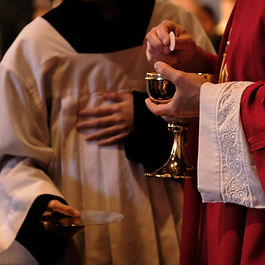
The Most Holy Body and Blood of Christ
Year A | 7 June 2026
Sisters & Brothers,
The Eucharist is the centre of our faith. The presence of Jesus Christ in Holy Communion is the core of the belief system of the Catholic Church. Starting at the Last Supper, which Jesus had with his Disciples, the Eucharist gathers people around the table of Christ and helps them to feel as one family of believers.
Following the teaching of Jesus from today’s Gospel, we profess that his Body is real food and his Blood a real drink. At every Mass Jesus is coming to the altar and in Holy Communion we receive the real Body and Blood of Jesus Christ.
Through the Eucharist and Communion, Jesus chooses to be always with us; through the consecration of bread and wine he wants to be present in our lives; through Holy Communion we can be united with him.
As Christians we have always believed that. People who believed in Christ from the times of the Apostles gather today to listen to Jesus’s words and ‘on the breaking of the bread’. For their faith and love of the Eucharist believers were ready to pay the highest price, lots of people sacrificed their lives, many became martyrs. It happened not only two thousand years ago but takes place today as well.
Today, Corpus Christi Sunday, or The Most Holy Body and Blood of Christ, is celebrated. On this special day, 37 young parishioners will receive Holy Communion for the first time. The first time they will fully participate in the holy Mass and host Jesus in their hearts. Let us pray and support them on this special day.
We as their parents and grandparents want to be witnesses to how important and how precious Holy Communion is. Let us tell them how the Eucharist changes our lives, how it helps us to be better people. We want to believe that the years of receiving the Living Bread has made us more like Christ.
We are not only the teachers of those children, but we should learn from them, how important and valuable Holy Communion should be to us. Let this day and the children’s celebration remind us of our first Holy Communion; how important and emotional it was to us. May this day refresh in us our love and respect for the Eucharist. Let every Holy Communion, daily or weekly, be received like our first one, with joy and emotion in our hearts. Receive Holy Communion like children to enter the Kingdom of Heaven.
On Corpus Christi Sunday let us profess again that we believe that only his Body and his Blood is nourishment for eternal life.
Have a blessed week,
Fr. Bogdan
The Solemnity of the Most Holy Trinity
Year A | 31 May 2026
Sisters & Brothers,
The Holy Trinity is one of the most difficult dogmas taught by Christianity. In this doctrine the Church teaches us that there is only one God, but that God is three persons at the same time. These persons are equal, of the same substance and share the same dignity and majesty.
For ages people have tried to explain and understand this mystery. There were many different ideas and approaches. St Patrick compared the Trinity to a three-leafed clover to explain it to people in Ireland, and theologians wrote thousands of books to find an answer. We still do not understand. We still believe that God is one; one but in three persons – God the Father, God the Son and God the Holy Spirit.
Many times, we feel that our words are not good enough to describe the world and reality in which we live. Life is too rich to be expressed by our language. How often do we feel that our words are poor and clumsy when we try to talk about God and his attributes.
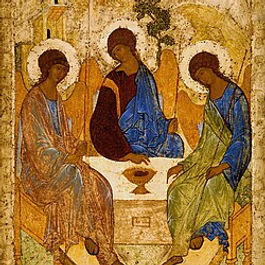
The Orthodox Russian painter Andrei Rublev showed us six hundred years ago who the Trinity is. His brush teaches us more than many theologians. He painted three Angels as the Father, Son and the Holy Ghost. They are sitting contemplatively around a table and are inviting us to join them, to be a part of that ‘body’. Rublev and the Trinity icon, shown on the opposite page, tells us that we do not always have to understand. Sometimes we can simply stop, take a break, sit with God and ask him for answers and wisdom. Theological books are great but only try to put into words what God wants to tell us, what God revels about himself.
On Holy Trinity Sunday Jesus, who is himself the revelation of his Father, tells us that God is the God of love. Jesus speaks to us, to today’s Nicodemus’s, to people who want to believe but are scared, to us who want to understand more than we are able to, and to people who ask so many questions. Like to Nicodemus, Jesus says to us that we are loved by God. We are loved to the point that he sacrificed his only Son. God sacrificed his Son to save us, to save you and me. So, there is no need to doubt, there is no need to be scared.
Let us look with Andrei Rublev at the Trinity icon and come to the three Angels. Let us accept the invitation to sit down with them and be silent. Sometimes silence tells us more than many words. Let us sit at the table with God and contemplate his love and presence.
Who is God? Who is the Trinity? Many doubts, many questions. There is only one answer: God is love and you are loved by him.
Have a blessed week,
Fr. Bogdan

Pentecost Sunday
Year A | 24 May 2026
Sisters & Brothers,
‘Peace be with you’ – what a beautiful greeting. These wonderful words of Jesus give calm to our hearts. His words are so needed, especially today when we hear about war and conflict around the world, in a time when many cities are bombarded and destroyed, when watching the evening news gives us anxiety and makes us uneasy. Jesus’ greeting is refreshing and brings us hope that in that uncertain time God and his Spirit is with us. We dream about harmony and unity between nations, peoples, and among members of a family.
Many times, we have a ‘ceasefire’, but we need peace.
Anxiety and chaos are not only our experience. Jesus’ Apostles had that experience as well. After Jesus’ death and resurrection, they feared the Jews and worried about their future. The world was a difficult, dangerous place for them. It was a time of anxiety, persecution and danger. In that difficult moment, in that environment of uncertainty, Jesus came to them with his peace, with assurance that he did not leave them, he did not abandon his friends.
His simple words, ‘Peace be with you’ filled them with joy and confidence. His greetings, his appearance, calmed their hearts and all storms and fear disappeared.
Jesus came to his disciples with his peace and with the Holy Spirit. Pentecost Sunday reminds us that. With his peace in their hearts and the gifts of the Holy Spirit, the Apostles were able to go out to proclaim the Good News. They went out to Jews and to Greeks. They shared their faith with anyone who wanted to listen.
Jesus’ presence did not change the world; it did not stop the danger and problems around the Apostles. The Holy Spirit did not cease the danger of imprisonment and death for the disciples. Nothing changed in the world, but Jesus’ peace changed the Apostles’ hearts. They were afraid no more; they had courage and trust that with Jesus they are safe.
On this Pentecost Sunday, let us open our hearts for the Holy Spirit. Let him come to us with his gifts again. Let us open the door for Jesus and his peace. Let us feel the same joy which the Apostles did.
We still desire peace and harmony among nations and families. And we know that Jesus’ greeting, ‘Peace be with you’, will not change the world. The Holy Spirit will not force a ceasefire. But we know that Jesus’ peace changes our hearts; that peace takes away our fear and anxiety. The Holy Spirit gives us courage to follow Jesus in our lives.
Let us always share the Apostles’ joy, whenever we hear Jesus’ greeting, ‘Peace be with you’.
Have a blessed week.
Fr. Bogdan

The Ascension of the Lord
Year A | 17 May 2026
Sisters & Brothers,
Australia is the dream country for many. Almost nine million people who live here were born overseas. That is thirty-three per cent, which means that one in three of us was born somewhere else. Another twenty per cent are second generation immigrants.
Many people came to Australia and believed that it would be a better place to live, that Australia can be their new and safe home. Many of us came here as single persons to check out a new country. Later, the whole family joined them to enjoy life here.
Today we are celebrating the Ascension of the Lord, and we recall the day when Jesus went back to his Father, to Heaven.
Jesus did not go to Heaven to discover it, to find out how it looks. Not at all. He knew it very well and was very familiar with it, because he was there before he came to us. Heaven was his ‘Fatherland’, it was his home.
Today Jesus goes back to the best ‘country’ we can live in. He does it in the presence of his disciples, of his friends. He tries to show them the direction of where and how to go to that ‘promised land’. Jesus goes to Heaven, but he does not want to be there alone. He goes there to prepare ‘room’ for us.
He wants the Apostles, his friends, to share that beautiful space with him. People that Jesus loves should be with him. Heaven is a place where there is room for everyone. It does not have a space limit and never will be overloaded, overpopulated. Everyone is invited and all will be welcomed.
The Ascension reminds us that the earth is not our destination. We were created for Heaven, for eternal joy. All people have a right to know that. So, let us go with the Apostles and proclaim the Good News. Let us go and make disciples from all the nations, from every country, town and village.
We cannot just think about ourselves. We have to share the information about Heaven with our families, friends and all people we meet. Let us be like our ancestors who arrived in Australia, like those who saw this ‘promised land’ and were amazed by this place. They invited and encouraged families and friends to join them and share their happiness. We cannot be selfish; we should not keep this ‘secret’ to ourselves.
Heaven is our destination. Let us remember it. Today Jesus showed us direction and a way to go there.
Let Heaven be our dream; let it be our desire. One day it will be our home. Forever.
Have a blessed week.
Fr. Bogdan

Sixth Sunday of Easter
Year A | 10 May 2026
Sisters & Brothers,
Words are important. They can be very powerful. By using them, people not only communicate and send information, but show their respect and esteem to others and talk about their intentions. Words can be supportive and helpful, but they can be merciless and harmful. People’s declarations are essential. They tell us about people’s values and what is important to them. We have to be careful what we say, when and how.
But, at the end of the day, they are just words. Do people always say what they mean, or what they believe? ‘Practice what you preach’ – we say.
Today, Jesus talks to his disciples. He knows their declarations; he heard many times their words of friendship, closeness and loyalty. They are nice, supportive words. But just words. Would their
friendship survive difficult moments? Would their loyalty last in the time of persecution?
Today, Jesus explains a very simple truth, he clarifies to the Apostles that statements and verbal assurances mean nothing without practicing them. ‘If you love me, you will keep my commandments’ – what an easy way to check someone’s declarations. Simply, Jesus says to his disciples that if they respect him as a teacher, they will follow his teaching; if they believe he is God’s Messiah, they will accept his words. If they are his friends, they will trust him. In other words, if you believe that I am Christ and you love me as the Son of God, you will respect my teaching, my commandments.
People declare many things but don’t always follow their own words. Many declare friendship but have no time for others, talk about loyalty but are happy to betray, they promise love to their families but perform violence and chaos.
Words and life are two different things. We know and understand this perfectly. We go to church, we pray, we declare to God that we believe, we trust and we love him. It is a great declaration, but it is not enough. Our words and statements do not satisfy God. He looks at our lives, our choices and works. Our faith, devotion and love are verbalised in our lives by respecting God and his Ten Commandments, not by meaningless prayers, but by keeping Jesus’s ideas and teachings, not by shouting about our faith.
Words are important. They can be very powerful. But if we do not practice what we preach they are meaningless. At every Mass, in every prayer, we repeat to God that we respect, we believe, we love. Let our lives confirm what our lips declare.
Have a blessed week.
Fr. Bogdan
Fifth Sunday of Easter
Year A | 3 May 2026
Sisters & Brothers,
There is no such thing as a town or a village, or even a place, without problems. If you try to run away from your troubles, you will find new ones waiting for you in a new place. Sometimes we have dreams, that by moving from one place to another, our lives will be easier and without any difficulties. But it is just a dream. Our problems and anxieties usually travel with us.
I have had the opportunity to travel to many countries around the world, I had the chance to live in many different cultural environments, but I have never seen any village or community with no problems of one kind or another.
Life without difficulties and confrontations does not exist. People face many challenges every single day. This is life today and will be like that in the future. It was in the past as well. Two thousand years ago, in Israel, people had their own concerns; some of them were different, some similar to those we face today.
Today, Jesus speaks to his disciples, to the Church. He comes to people who struggle in many ways, to people who worry about their future. Jesus comes to them with one important message: ‘Do not let your hearts be troubled’. Jesus’ advice is different from that of any other ‘gurus’ of the world. He does not give any easy or cheap solution. Jesus asks that we keep our hearts in peace. This does not mean be careless, neglectful, or do not be thoughtful about future. Jesus and his peace do not promise to end of all problems.
But Jesus gives the reason for the peace of hearts; he reminds the Apostles that their faith in God, their trust in God, and in their Teacher, should be the source of peace, harmony and joy. ‘Trust in God still, and trust in me’. The foundation of their happiness should not be any earthly power or dominance; they should not seek any position on the ‘right’ or ‘left’ side in the Kingdom.
The lives of the Apostles were not easy or without troubles, but they knew that at the end of their journey ‘the room in the Father’s house’ awaited them. They knew that their future was clear and optimistic – an eternity with Jesus. That put peace in their hearts.
Talking to people around us, listening to the news, and seeing the problems around the world, our hearts can be troubled as well. But like the Apostles, let us listen to Jesus’ words and try to keep peace and hope in our hearts. A perfect world without problems does not exist.
But in God we trust. He is the source of our heart’s peace.
Have a blessed week.
Fr. Bogdan
Fourth Sunday of Easter
Year A | 26 April 2026
Sisters & Brothers,
The Fourth Easter Sunday is celebrated as Good Shepherd Sunday. This day is a special one when the Catholic Church thinks more and prays for new vocations, those taking on the vocation to be priests, and religious brothers and sisters.
Today the world gives us many alternative ways, choices and ideas to follow. Many people pretend to be leaders and gurus. They want to guide others to places which could give us happiness. These self-proclaimed leaders want to be modern-day prophets and messiahs. Some of them even believe that they are special or ‘chosen’ people, but some of them are simple cheaters. They want to be leaders and guides, but they do not know the ways to pastures, they never met the ‘Gate of the sheepfold’.
On Good Shepherd Sunday, Jesus tells us that only he is the guide who knows the road, only he is the one who cares about the sheep – his Church. Jesus is the only leader who is able to sacrifice his life to save the flock. He is ready for crucifixion, just to give life to his Church. Jesus is the gate which leads people to salvation.
This Sunday is a great opportunity to think and pray for new vocations in the Church and for our Diocese. We should pray and support the young men and women who want to serve God and his flock.
This week our Diocese will celebrate with joy the ordination for priesthood of three young men. On Wednesday, Archbishop Anthony Randazzo will ordain three candidates: Tan Nguyen, Shayne D’Cunha and Huy Tran. These new priests will be the signs that Jesus never abandons his Church. He walked with his apostles in Judea and Galilei; he was with them in the moments of trial and persecution.
On Pentecost, Jesus was with Simon Peter to support his proclamation of the Good News and today Jesus is with his Church, to give us new priests, nuns and monks, to give us people who will help us to find the way to the Gate. Good Shepherd Sunday reminds us that Jesus never leaves his sheepfold, that he always guides us through the servants who are chosen and shaped by him in his own image.
This Sunday should be an invitation to pray for the new vocations, for the people who would serve us with sacraments, for those who would proclaim the Word of God, who will continue to teach Jesus’s Gospel.
Let us remember to pray for Tan, Shayne and Huy who will be ordained on Wednesday. Let us pray that Jesus will continue to send the Church the new workers.
Have a blessed week.
Fr. Bogdan

Third Sunday of Easter
Year A | 19 April 2026
Sisters & Brothers,
As humanity, for thousands of years we have achieved a lot. We discovered how to control fire and how to use a wheel. People made a lot of effort to make our lives easier, safer and longer. We have tools and medicaments. For ages scientists spent years in libraries and laboratories to help us understand this world. Not all the time were these people successful. Many times, they were frustrated and disappointed. But from time-to-time people discovered what they did not expect.
Alexander Fleming accidently discovered penicillin and later the first antibiotic. Similarly, Röntgen discovered x-rays which later helped in medical imaging. Both of them were seeking something else but the final effect was much better than they expected.
The Jews who followed Jesus, they had the right to expect the restoration of the Kingdom of Israel. They read the Bible; they studied the holy books and listened to the prophets. They were able to connect the dots. They understood that Jesus was the promised Messiah. Jesus was the man they were waiting for.
He was the one foretold by the prophets. People who met Jesus believed that he would take the place of king David on the Israelite throne. People expected, Jesus’ followers expected, and the Apostles did as well.
Today, two disciples lost their hope. For three years they followed their dream, they believed that they found what they were looking for. But on Good Friday their dream was over, and on Easter Sundy they went to Emmaus; they went back to their previous life.
Were they disappointed with Jesus? Did they invest their hope in the wrong man? Surely, they expected something other than crucifixion.
Can you associate with these situations? Can you feel the frustration of the hardworking but unsuccessful scientists? Can you understand the disappointment of the disciples walking to Emmaus? Maybe you yourself invested your time, your skills and energy to achieve something in your life? Whether in spiritual or physical life. Maybe you were so devoted to your work or efforts, but the achievement was disappointing?
On the road to Emmaus Jesus helped his disciples to understand what God prepared for His people. The disciples were waiting for freedom for one nation, restoring the kingdom for Israel. But Jesus’ gift was much bigger. He gave freedom from sin to all nations, he offered a new life to all people, his Kingdom was for all believers. The disciples got a lot more than they could expect, the reality was much greater than their dream.
We too, work and pray to reach our dreams; we too wait for our ‘kingdoms of Israel’, but our dreams are not becoming true. But God prepares something bigger, something we do not even dare to dream of. God’s gift is like penicillin for all humanity.
Let us not stop to pray and trust. One day our eyes will be open; one day we will recognize Jesus’ presence in our lives.
Have a blessed week.
Fr. Bogdan

Divine Mercy Sunday
Year A | 12 April 2026
Sisters & Brothers,
The Easter season is a time of the Good News. Last week we found out how much we are loved by God; how much he cares for every single one of us. At that time, we learnt that God offered his Son to save us; he sacrificed his only Begotten to give us a new life. Can his love be proved more? We should doubt no more.
Jesus himself brought this good news to his disciples. They could see him, talked to him, and even touched Jesus’ wounds. They knew that their Teacher was alive; he was with them again. But it wasn’t just ‘local’ news - news for a few chosen Jews. Jesus sent the Apostles to spread the Good News wider. He sent them everywhere to share their joy. The disciples went to every town they could in the Roman Empire; they were witnesses in every corner of the ancient world.
Jesus did not send only a small group of his Apostles to the Jews; his message did not remain in the ancient era. Through the ages Jesus chose many people to remind the faithful about his presence in the world. People like St. Francis of Assisi reminded us about God’s love and kindness.
Today, when we celebrate Divine Mercy Sunday, we remember another saint, Saint Faustina Kowalska, a simple sister from Poland. For many, she is called the Apostle of Divine Mercy.
She was sent by Jesus as well. Jesus wanted her to remind his Church that God is merciful, that nothing has changed since he was crucified. Just as two thousand years ago he died to save sinners, he wants to help sinners today too. Sister Faustina reminded us that God’s mercy is for everyone, that every person should have hope that their sins can be forgiven. For God, nothing is impossible. Even to Judas Iskariot Jesus said, ‘my friend’. Whoever will acknowledge their sin will be pardoned, whoever asks for forgiveness, it will be granted to them.
Saint Faustina was sent by Jesus from her cell, from her room to give a message to the world. It was not a revelation. Just a simple reminder: God is merciful.
Let us, the people of Holy Cross parish who call ourselves the disciples of Christ, listen to Jesus’ order which he gave to the Apostles: ‘I am sending you…’ Let us go and spread the Good News that Jesus died for us and has risen. Jesus gave us new life. Like Saint Faustina, tell people that the merciful God waits for them to forgive, to give them another chance.
God is loving, God is merciful! Spread that Good News – I’m sending you.
Have a blessed week.
Fr. Bogdan
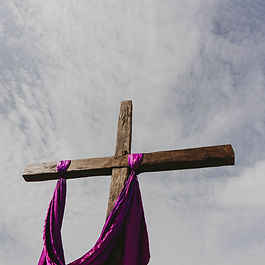
Easter Sunday
Year A | 5 April 2026
Alleluia. Christ Is Risen. He Is Risen Indeed.
Sisters & Brothers,
Today we celebrate Easter, the most significant solemnity in the Church. Today we commemorate the holiest time of the year.
Starting from Ash Wednesday, we commemorate the most important moments from the last days of the life of Jesus. We accompanied him when he was tempted for forty days in the desert, and we saw his victory over the devil. On Palm Sunday we walked with him to Jerusalem to tell everyone that Jesus is the long-awaited Messiah. We sang with people ‘Hosana to the Son of David’, that means hosana to the Messiah.
On Thursday we participated in his Last Supper, and we witnessed his first Eucharist. On that day Jesus gave his Body and Blood to his disciples. We were with him in Getsemani, when he prayed for strength and courage to follow his Father’s will. We were witnesses to Judas’s kiss of betrayal and Jesus’s arrest. We followed him secretly when he was in court, like Peter, and we hid from the people’s sight. We heard people shouting, ‘crucify him’, and the delivery of Pontius Pilot’s sentence.
On Good Friday we saw him of the Cross, sacrificing his life for us. Finally, Jesus was crucified and died. It was a very painful experience to see his fear, his pain and loneliness.
But today is Sunday. Christ is Risen. Jesus is alive. The tomb is empty.
Today we come to the church to express our happiness and to share the overwhelming joy of three Mary’s and to listen to the Good News which the Angels revealed to the world: Jesus who suffered and died for us on Friday is alive again. Alive forever.
We came here to celebrate the hope that after the dark and painful days the brighter ones are coming; after the suffering and sorrow of Good Friday the joy of Easter Sunday appears.
Let us take home the joy of Easter with us. Let us tell our families and friends the Good News, that Jesus’s tomb is empty, that he is alive. The truth of our redemption cannot be celebrated only in churches. As Christians, as the sisters and brothers of Christ, we must celebrate every single day. Jesus suffered and died for us, but he won death and gave us new life.
May this time of the Easter Season be for you and your family a time of new hope which radiates from the empty tomb of Jesus. May his Resurrection bring peace and joy to your home.
Happy Easter. Jesus is Alive! Christ is Risen! He is Risen Indeed!
Fr. Bogdan

Palm Sunday
Year A | 29 March 2026
Sisters & Brothers,
It is good to live in a family; it is great to have friends around us. We were created to be a part of some kind of community. Without parents and the support of others we would not survive. We need people to live, to learn and to progress. ‘No man is an island,’ John Donne said. We copy our first words, our first steps from our mothers and fathers. They teach us what life is.
A cohort gives us support and we can feel part of a bigger and stronger group. Being a part of something bigger, we can be more anonymous and not controlled. It gives us courage to express ourselves more freely and openly. To communicate our views and beliefs as individuals is more difficult.
The episode which occurred two thousand years ago in Jerusalem, reminds us of one aspect of human nature; we love to be part of the crowd and hide ourselves behind the backs of others. On Palm Sunday the crowd followed Jesus and shouted, ‘Hosana to the Son of David’. The people of Jerusalem recognised him as the king of Israel, they acknowledged him as the Messiah who was sent by God.
Some people who were on that day in Jerusalem hardly heard about Jesus. They heard some rumour, but they never met him personally. They saw the excited people singing ‘Hosanna’. To be part of that crowd they shouted as well, even if they did not believe, even if they did not understand. They did not worship Jesus because they knew or accepted his teaching. No, they worshipped because the others paid homage.
A few days later the same people were in the crowd who demanded from Pontius Pilate a death sentence for Jesus. They did not hate him. They hardly knew him and his teaching. It just happened that they were inside the crowd. Maybe they were curious what was going on? Maybe they had nothing better to do on that day. The crowd shouted, ‘kill him, crucify him’. The random people did not want to kill Jesus; they did not hate him. The mob did, the mob shouted. The random people wanted to be a part of a ’bigger event’. The random people were too weak to say no, to leave the crowd.
It is good to be part of a bigger family, a community. We can have many benefits and feel their support. But let Palm Sunday remind us that our competence and our reason have to guide us. We should praise and worship God because we have love in our hearts, not because the others do; we should sing ‘Hosana’ because we believe in Christ, not because of the crowd. At the same time, have courage to leave the crowd, when the others shout, ‘kill him’, when the mob demands crucifixion.
During Holy Week, as part of the community of the Church, following our hearts and minds let us worship Jesus, let us sing ‘Hosana to the Son of David.’
Have a blessed Lenten season,
Fr. Bogdan
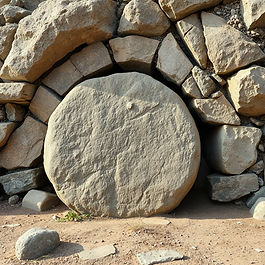
Fifth Sunday of Lent
Year A | 22 March 2026
Sisters & Brothers,
People say, ‘If you want to make God laugh, tell him your plans.’ We have our dreams, our plans, and we try our best that they become true. Certainly, we should work hard and do whatever we can to make our lives easier and more beautiful. We study hard, we finish school, start new jobs… We have our plans; we imagine our future. We think about starting families and other roles in our lives. There is nothing wrong with that, it is not incorrect to know what we want.
As reasonable people we cannot just ‘flow with the river’, and not care what is going on around us. Any rational person should have some plans and be prepared for challenges in their lives. But before we ‘inform’ God about them, maybe we should ‘consult’ with him.
Today we hear the story of three siblings, Martha, Mary and Lazarus, the very good and special friends of Jesus. He visited their home and enjoyed their company. Today the two sisters sent a message to Jesus to inform him about their brother’s illness. The sisters informed Jesus what would be, in their opinion, the best for their brother. They did not ask Jesus what he thought, or how he could help, or what would be the best for Lazarus. They wanted Jesus to follow their ideas. It looks like they were upset; Mary did not want to see Jesus but remained at home, and Martha was complaining, ‘If you had been here, my brother would not have died.’ They knew Jesus is powerful, they believed that he is the Messiah sent by God. But they were upset, because he did not listen to them, and he did not do what they wanted.
Does this sound familiar to us? How many times do we pray and we have already an idea what God should do? How many times in our prayers do we tell God what the best solution for our problems would be? We think that we know what we want, what would be great for us, for others and even for the world. We could give God some advice, we could tell him how to fix the world. If he just follows our ideas, if he only listens to us.
Mary and Martha did not understand Jesus’s mission, they did not know why their brother had to suffer. Why did he have to die? Jesus knew why.
It is hard to understand God’s ways. Let it not stop us to pray and talk to God. But when we pray let us not just ‘inform’ Jesus about our problems, let us not only request a particular solution. Let our prayer be a ‘consultation’ and ‘discussion’.
Jesus has the best solutions for our lives and challenges. If you trust him and allow him to act, Jesus will finish your problems, he will take you out of your grave. Jesus will restore your life.
Have a blessed Lenten season,
Fr. Bogdan

Fourth Sunday of Lent
Year A | 15 March 2026
Sisters & Brothers,
No one wants to be called ignorant; nobody wants to acknowledge their ignorance. We want to believe that whatever we do, we do it correctly. If people do something for years, it is hard to say to themselves that they were wrong for so long a time. Starting from kitchen equipment and finishing with driving rules – we use them incorrectly and without understanding. By watching a simple TikTok video, we can find out a better way of doing many things.
The blind man approached by Jesus, did not know what it means to see. From his birth he never had. He could not even imagine what Jesus wants to give him. Sight was a free gift given by Jesus and from his own initiative.
The blind man did not ask for any favour, but, at the same time he happily accepted it. He could have rejected Jesus’s offer and continued his miserable life. But he believed that Jesus could change his life for the better. He went to the Pool of Siloam to wash away his mistakes and his previous life.
The same gift Jesus offered to the Pharisees. He gave them the chance to see the world from a different perspective, to improve their lives. But they rejected that offer. They preferred to be blind.
Besides sight, Jesus gave to the blind man the gift of faith. Not only could his eyes see the light but also his soul was enlightened. His life changed dramatically. Maybe it was not easier, but for sure it was better.
The Pharisees, on the other hand, believed in their own perfection. For ages they followed rules written by themselves. As educated people, they believed that they knew and understood all the commandments written in Scripture. To acknowledge that they were mistaken for such a long time, they would have to be humble. They could not acknowledge that – they were too arrogant to do so. To accept Jesus’ gift would mean for the Pharisees to see the world through Jesus’ lenses, to have his perspective. They chose to be blind.
Listening to the Gospel today, we have to ask ourselves where we place ourselves in that story? Surely, Jesus offers his free gifts to anyone, and his grace to everyone who is happy to accept it. We can be like the blind man who received Jesus’s present with happiness. We can go to the Pool of Siloam to wash away our past and to have a bright future with God. We can also choose to be like the Pharisees, who believed in their perfection. We can keep doing things like we did before.
Let us pray for the courage to acknowledge our ignorance from birth. And let us have courage to accept the gift from Jesus. Let our lives be enlightened by him.
Have a blessed Lenten season,
Fr. Bogdan

Third Sunday of Lent
Year A | 8 March 2026
Sisters & Brothers,
Travelling around the world can teach us a lot about different countries and places. It helps us to understand other cultures and their unique customs. Majority of people think that visiting unknown places and regions gives us many benefits, like knowledge, understanding and information. We can experience the weather of new places and taste the food of a different country.
But there are some people who do not want to travel. They are homebirds and feel best in their own homes. For them home is a safe zone and a space where nobody can disturb them. These people do not want to risk any uncomfortable questions, conversations or to hear new ideas. They love what is familiar to them and they do not feel or need to change it.
Leaving your comfort zone and travelling gives benefits not only to the person who visits the foreign place but also to the people who are visited.
Today Jesus went to Samaria, to a region which was not very friendly to the Jews. Jesus left his comfort zone and went to a country which was not waiting for him. But it did not stop him visiting people who were not ready for his message. Jesus started a conversation with a Samaritan woman simply asking her for a cup of water. It was the first step to open a dialog, to share opinions and exchange worldviews. The meeting started with a cup of water and finished with conversion and the professing of faith by the Samaritan women.
We love our comfy homes, our safety spaces. Not only literal ones: we have our inner rooms, our beliefs and superstitions. Every person has some places where they feel safe and secure and do not want to share them with anyone else. They do not need to go to ‘Samaria’.
Today’s Gospel has to remind us of Pope Francis’s words, which he said a few times, that we are called “to go forth from our comfort zone and to reach peripheries”. Pope Francis told the young people of Krakow: “do not make your lives a comfortable sofa and fall asleep”.
We should go to Samaria as well. We should travel to unknown places. It is true that we can feel a bit uncomfortable, maybe even strange. But we have the opportunity to meet some interesting people. Maybe even a ‘Samaritan woman’.
Let us have Jesus’ courage to meet people who we do not know, to talk to strangers who come to our lives. If you have courage to start a dialog and ask them for a cup of water, you will get more than you expect. The ‘Samaritan woman’ can not only quench your thirst for water but also satisfy your inner hunger for God.
Have a blessed Lenten season,
Fr. Bogdan

Second Sunday of Lent
Year A | 1 March 2026
The beauty industry is one of the biggest in Australia. People spend more than seventeen billon dollars on cosmetics and beauty salons. From ‘baby boomers’, to ‘gen Z’, women and men, rich and poor, everyone tries to look better. Many want to maintain their physical condition, but others try to look even better. People are ready to pay and easily spend significant amounts of money to improve their skin, hairs and nails. It is very popular to ‘decorate’ one’s body with colourful tattoos. We are able to do a lot and to pay good money to look good and to feel well about our self-image.
Do we think about our souls in the same way? Do we put any effort to improve our spirituality?
Today we see Jesus on the Mountain of Transfiguration. He went there to pray, to talk to his Father. Jesus even physically meets and speaks with Moses and Elijah, two important figures for the people of Israel.
This time Jesus did not try to teach his disciples how to pray, he did not ask them to pray with him. In fact, they fell asleep. But at the same time, they were witnesses to how prayer can change a person, even physically.
The disciples described how Jesus’s face ‘shone like the sun’, that he was full of light. A similar light had been upon Moses after he spoke with God in the Tent. The light was like an image of God; God’s signature on their faces.
The story of the Transfiguration of Jesus teaches us the power of prayer. The time spent with God did not only change the face of Jesus but prepared him for difficult situations and challenges, including his crucifixion. The prayer did not change reality but gave him strength and courage to accept God’s will and his mission.
We should learn from Jesus and remember that prayer transforms our lives. It is not only Jesus or characters from the Bible who can speak with God.
Today, many do the same. Look around you and you will recognize people who pray a lot. Maybe their faces do not shine like the sun, maybe you cannot see that something special. But at the same time, you will notice that they radiate with peace, their faces bloom with kindness. You can see that they are friends of God because his signature is on their faces.
We spend so much time, money and energy to look after our faces and bodies. There is nothing wrong with living and looking healthy. But let us ask ourselves – how much time and energy do I use to look after my soul, my spirit?
During this Lenten season, let us open our Bibles, spend more time speaking with God. Let this time transfigure us. Look today in the mirror. Is your face shining? Hopefully it shines with peace and kindness.
Have a blessed Lenten season,
Fr. Bogdan

First Sunday of Lent
Year A | 22 February 2026
From time to time everyone must make an important decision. It is not so easy, especially when we are busy and have many other things to do. When people have to decide about something that would have a huge impact on their future, they need quiet time. Unfortunately, the world and our lives move faster and faster every day. People do not have time to stop and reflect on the issues which can change their lives. People’s minds are occupied with the many problems and challenges of daily life. People must think about families, jobs, health and many other things, so there is no time to think about metaphysical problems. How many times do we reflect on our spiritual life and our relationship with God?
At the beginning of the Lenten season, Jesus is going to the desert, to the place where he can be alone, far from the noise of the world and its daily problems. This is the beginning of his mission and the start of his vocation.
Jesus is not running away from the world, his family and the people who need him. Jesus is going to the place where, in a quiet and peaceful space, he can reflect on the task he will take on.
Jesus is going to the desert, led by the Spirit of his Father. He needs that quiet time to understand the importance of his mission and the responsibility placed on him.
As a man, Jesus was tempted like every one of us. The biggest temptation was to give up. How many times do we feel similarly?
The first of Jesus’ trial was focused on daily problems, on food and family issues. Maybe he thought that he was wasting time in the desert, when he could be so active in Nazareth. Why spend time in a desert when he could be needed by family.
Later, Jesus was tempted again not to waste time visiting a single village or town. He could use a brilliant shortcut. Why spend time in that lonely place if he can be with people, in the temple where he could impress everyone and show off a little bit? People would admire him and follow his words.
Finally, Jesus thought to postpone his mission. What’s the point to start his mission, when nobody knew him and he had no sources to support his project? Maybe it would be better to wait, better to postpone? One day he could know important people, maybe he would have money or even a kingdom?
Jesus did not leave the desert. He did not live in a dream. Jesus did not give up. He made his decision.
Let this time of Lent be ‘a desert’ for us. We must find time to have quiet moments. Let this Lenten season help us to make an important decision about our lives. Do not give up, do not postpone. Be with Jesus for forty days. On Easter we will be stronger people.
Have a blessed week.
Fr. Bogdan

Sixth Sunday in Ordinary Time
Year A | 15 February 2026
Sisters & Brothers,
At the beginning of February, the Winter Olympic Games started in Italy. This is the most important event for sport in the world. For two weeks people around the world can enjoy skills and competitions of sportswomen and men. These two weeks are a banquet for people who love winter sports. Many of us can only dream to be a participant in those competitions. Millions of people love skiing and many love ice skating, but just a few of the best are chosen to be a part of the Olympic Games. Many talented teenagers train for years in different disciplines to have the chance to be part of the best team from their country, to have the privilege to represent their state.
It is not enough to know the game; it is not enough to be good at it. If they dream to participate in the Olympic Games, they must be simply the best. These are the rules, the criteria. That is obvious. Everyone understands it and nobody complains about it.
Today Jesus tries to explain these important rules to his disciples, the rules which help to achieve heavenly happiness. The Apostoles are Jews, surely, they know the Law of Moses and God’s Commandments. Every person in Israel knew them. But Jesus does not want them to be ‘an average player’. It is not enough to be a ‘good citizen’. Jesus wants them to be the best.
Anyone can know the rules, many are able to ‘play’. But Jesus has higher criteria for his disciples; Jesus expects more from them than just to be an average follower. The Apostles, that small group of Jesus’ friends, those who were listening to his teaching every day and saw many miracles should be Jesus’ ‘dream team’ for the spiritual ‘Olympic Games’.
We, as a parish and every member of the Church want to be disciples of Christ. We understand that Jesus’ teaching was not only to the Twelve but to us as well. Let us think how we can implement his words in our daily decisions. We know that Jesus does not want us to be average ‘players’. He wants to have the best followers in his ‘team’.
In a few days we are going to start the Lenten time. On Ash Wednesday we will receive dust as a symbol of humility and penance. From that day we can start our preparation. Like the Olympians we should launch our ‘training’. And like Olympians, we have to be the best. Like these sporting champions we have to compete, but unlike them we do not try to defeat others but to beat our own weakness, to be better than we were the day before. We do not contest to win an Olympic medal. Our victory and prize is the Kingdom of God.
Have a blessed week.
Fr. Bogdan

Fifth Sunday in Ordinary Time
Year A | 8 Feburary 2026
Sisters & Brothers,
The North Star is one of the most important celestial bodies, in fact, maybe even it is the most important one. It never moves, always in the same place. For thousands of years, it was a guide for sailors who crossed the seas and oceans. The North Star showed the way to people walking through the deserts. For ages, whoever travelled sought that star to lead and guide them to their destination. On the huge waters or the inhabited lands, the sky was the only possible and accessible map.
But what if the captain of a ship or the leader of a caravan did not know how to read the sky, how to understand that ‘map’? That kind of guide could mislead many people; he could put many people in dangerous situations or even risk their lives. The guide who misleads people, is worse than none.
Jesus calls his disciples to be the light which helps people to find the right path. Every disciple has to be a good guide; every disciple should lead people to the right destination. But the words of Jesus were not said to the people living two thousand years ago. Jesus speaks to us; he talks to the modern believers who want to follow him.
In today’s Gospel Jesus invites disciples to be a light. But it is not always easy to be that, but at least we should remember that Jesus is a real light, he is our North Star, which leads us to God’s Kingdom, our destination place. Maybe not always we are able to be a bright light, but at least we should be like a good ship captain who can point to the Star. At least we should not be like a dark cloud which covers the beauty of the sky and hides the true Guiding Light.
Jesus invites us to be perfect, to be a light, to be like him. But it is very difficult to follow Jesus’ wish because we are just weak sinners. If we cannot be bright stars, maybe we can show people where the true Star is; if we cannot be good guides at least, we can stop misleading people by our wrong examples.
Listening to today’s teaching of Jesus, let us reflect on our own lives. Let us remember that every single choice, every particular decision sends a message to people living with us and around us. Our actions can be a guideline for others or just the opposite. My deeds can help people to find a better, safer and brighter place or lead them to real darkness. Let us be aware of it and responsible for our actions.
Jesus is the source of light; he is the North Star. As his disciples, let us be the light, the rays of Jesus’ Star.
Have a blessed week.
Fr. Bogdan

Fourth Sunday in Ordinary Time
Year A | 1 February 2026
Sisters & Brothers,
Walking into a bookshop we can see many interesting books. Some of them give us knowledge, some of them help us to relax. There is another type of book which tries to teach us and make our lives easier and better. There is a special section of a bookshop that has many different guides. Some of them can be helpful and beneficial, especially if we have some problems. But some of the guidebooks look a bit suspicious and magical. They promise to make us ‘millionaires’ in two weeks or to lose weight in a few days without any exercise or dieting. Some guidebooks promise solutions for any problems people have.
But this is nothing new. People always needed some guides to help them understand life. For ages we had ‘gurus’ who pretended to have answers to all people’s questions.
Sometimes it is difficult to recognise a good guide from a false one; people who want to help versus those who promise unreal or magical solutions.
Two thousand years ago people were seeking guidance as well. There were many who wanted to be leaders and give directions.
Today we heard the story about Jesus and the people who came to him to listen, to reflect and to follow his ideas. Jesus’ teaching was different. People could feel like his words had power, his teaching made sense and his guidance led them to a better place.
The common rules people heard before were: if you are stronger, smarter, bolder, you are better - if you do not worry about others, you are the best.
Jesus’ teaching on the Mountain is absolutely opposite to these rules. He encourages us to follow the example of his Heavenly Father. If we can be gentle and merciful in our hearts, we are like him, if our hearts are pure and thirsty for peace and justice, we are God’s children. We should be happy even if we are falsely accused, persecuted and gossiped because God looks after us.
Jesus’ teaching is difficult to follow. It is not easy to adopt these rules. But if we are humble enough to listen to Jesus, if we trust that God cares about us, that teaching on the Mountain will give us peace and assurance that we are not alone, that our efforts and struggling in this life makes sense.
Do you seek any guidance for yourself? Do you want to find the right direction? Many people are happy to give you advice, to show some paths. But are all of them good, do all of them bring us to the right place?
When you go to a bookshop or to a library you will see many books, books bigger and smaller, beautiful and simple. But choose wisely – take the guidebook which is good for you. Many want to give you advice, but Jesus gives us the best guidebook we need.
Have a blessed week.
Fr. Bogdan

Third Sunday in Ordinary Time
Year A | 25 January 2026
Sisters & Brothers
It is not an easy task to start a new project. But it would be even more difficult if you knew a person who was unsuccessful. The failing of your friend or acquaintance takes your courage and confidence away. You can stop believing that your plan or idea makes any sense. Unfortunately, the people who heard about the persons project failing can discourage you as well. Because why waste your time and energy? Why start something that cannot be successful?
If you hear so many negative comments, if you meet so many discouraging people, what would you do? Would you be brave enough to start a new project anyway? Would you have courage to put down foundations for something that is uncertain? Do you have courage to follow your dreams? But, if you fail, what people will say?
Today “Hearing that John had been arrested, Jesus went back to Galilee”. He did not run away from Judea to a safer area, to a better place. He did not try to save his life. Not at all. The arresting of John did not scare Jesus but inspired him to start his own ‘project’. The sudden and tragic finish of John’s activity could not discourage him. Jesus went to Galilee to start his mission. Maybe he met people who tried to warn him, to give him ‘sensible advice’. Many people were worried about him. If Herod was able to imprison John the Baptist, the man people respected as a prophet, he could stop Jesus as well.
Despite the sensible advice and warning of many, Jesus started his mission, and he began to proclaim the Good News. Maybe not many people wanted to follow this ‘new preacher’, maybe some people were scared that he would share the fate of John the Baptist. But Jesus found a few disciples, people who believed in his new ‘project’. The Apostles were ready to leave their previous lives and follow Jesus and support him in his mission.
The lives of John and Jesus finished tragically, the founders of these new ‘projects’ were killed. But their missions were not failures. Maybe some people expected a different outcome, maybe they expected ‘fireworks’ and spectacular effects. But Jesus did not come to amaze people. He came to be faithful to his Father and his mission. His ‘project’ was successful. He started his mission with a few disciples and finished with the saving of the world and the conquering of sin.
Let us look at John and Jesus and have courage to follow their examples. We do not need to complete any spectacular ‘projects’. Like them, we have to be faithful to the calls we have from God. It is not ‘fireworks’ but faithfulness that is a success in God’s eyes.
Have a blessed week.
Fr. Bogdan

Second Sunday in Ordinary Time
Year A | 18 January 2026
Sisters & Brothers
Vocation, calling - these are words which sound a bit old fashioned. Today people think more like ‘ambition’ and ‘career’. Nowadays people want to climb higher and achieve more ambitious positions. A better position means better income; a better income means a more comfortable life. For many there is nothing more valuable than this; it is not a family life, not a friendship, not moral issues.
Career and ambition - these are most important. Ordinary jobs are just for plebs. The everyday works are for people with no aspiration. How many times we could hear that kind of opinion? Success is a word we love today. What would John the Baptist say about that opinion? Would he agree?
Last week we celebrated the Baptism of the Lord, the baptism of Jesus. Today we meet the man who baptised him. John, as an older man, started his mission before Jesus. His job was to proclaim the Word of God, to call people for repentance and to baptize those who believed. And many believed, many followed his teaching. Most people who listened to him believed that John was a prophet of God. Some people even suspected that he could be the promised Messiah.
If only John was more ambitious, he could claim to be the one. But John the Baptist knew his vocation, he understood why God called him. John knew his talents and the skills he had. He was aware of the job God gave to him. His role in God’s plan was to prepare the way for the Messiah, to remind Israel that the time was coming, and finally introduce to people the Lamb of God who was coming to the world. John understood that he was a voice but not the Word, he was a witness but not the Truth, he was a servant but not the Lord.
Vocation, calling – what does it mean today? Do you have your own vocation? Does it mean you cannot have any career?
Today we look at John and we learn from him. Firstly, we have to recognize what is my vocation, what kind of talents and skills God gave me? Later, I need to understand that there is no such thing as a ‘better or worse vocation’. God needs us all: mothers, fathers, teachers, carpenters, and many others. We have to be the best in our profession. We should use all the skills and talents which God gave to us to serve others. Finally, let truth and love be our compass, our guide.
Let’s be like John the Baptist; be faithful to our vocation, to God’s plan which is the best map for our lives. Let’s say together with John: “I am the witness that Jesus is the One”.
Have a blessed week.
Fr. Bogdan

The Baptism of the Lord
Year A | 11 January 2026
Sisters & Brothers
There are many important events in our lives. There are moments we can call milestones and they are the beginning of new chapters in life’s journey. It can be the beginning of primary school or the end of it; getting a diploma or other certificate of education can be another one. To have our first job or starting a new family can be other milestones in our development. We should be proud of many of these achievements and usually we are.
These moments form us, shape our identities and show who we really are.
What is your most important moment? What shaped or had a great impact on your life? Probably you have a few things in your mind. Do you think about your baptism in the same way? Did it change your life?
Today we are celebrating the Baptism of the Lord, the day when Jesus stepped into the Jordan River. It was a significant moment for him, when Jesus was publicly recognised by his Father. His baptism changed everything, it was the beginning of a new chapter in his life. For him the baptism was not an absolution from his sins; it was confirmation that he was the chosen one, God’s Messiah. From that day Jesus started his mission. That important event gave authorisation to Jesus to act, to visit villages and towns, to proclaim the Word of God and to heal people in need. But everything started from his baptism.
Let us ask that question again – what do you think about your baptism? When you get your school certificate you are encouraged to start a job, a new chapter in your career. You are educated; you are qualified to act.
We are baptised; we have baptism certificates. What does it mean for us? Baptism is a significant moment in our lives. That sacrament not only cleansed us of original sin, not only made us pure, but in that moment, we became children of God. What a great dignity! What a great privilege!
But baptism is not just to give us a personal benefit. In baptism we are obligated to be witnesses of God in the places where we live, work or study. Let Jesus who started his mission from his baptism be our guide and an example for us; let us try to follow his steps. Jesus taught people, gave food to the hungry and healed the sick. Showing the goodness of his Father was his mission. Let us try to do the same: let’s instruct people who ask, let us give bread to the hungry and look after the sick. Let our lives and actions confirm that baptism made us the children of God.
Have a blessed Christmas and a Happy New Year!
Fr. Bogdan

Christmastime
Year A | 24 December 2025
Sisters & Brothers
Merry Christmas. The Christ is born! Rejoice!
What a beautiful day. What a wonderful moment to celebrate. This is the day we waited for.
As families, communities and a nation we have many dates to remember and celebrate. Many of them are important and special in many ways. We celebrate our birthdays, we remember significant anniversaries, like weddings or ordinations. As nations we have special days as well, for instance ANZAC Day or Independence Day. All these days give us happiness and an opportunity to reflect on our lives. Also, as the Church we have many feast days to remember Saints and important events, including Easter which is the most significant solemnity.
But Christmas is different than all other celebrated days. You can feel it. The beautiful story of Mary and Joseph who could not find room to stay overnight is well known, even to people who are not Christians. The narrative of St Luke about Jesus and Bethlehem, about shepherds and the Angels is touching people’s hearts. We can imagine Jesus, the Son of God as a helpless baby who depends on his mother, who depends on us.
Christmas Day is a special one. It changes people’s hearts. There is a beautiful and well-known story from the First World War. On Christmas Day 1914 German and British soldiers ceased fire, stopped killing each other and celebrated Jesus’ birthday together. Christmas changed them from enemies to human beings again. For a few days they were not troops, they were fathers, husbands and sons. Once again Jesus, the God’s Messiah, became the Prince of Peace.
This is a touching story. But we can share many others from our own experiences. We can see how open and generous people can be at this time. At Christmas time we support Vinnies and people in need, we visit more often the lonely people.
Let this time be special in our families as well. Let us have courage to be humans. We can show kindness to family members or neighbours who are difficult to live with. Maybe we can call to and chat with our brothers, sister or some people we have not talked to for years - sometimes we don’t remember why or who started it.
Let this Christmas Day make us brothers and sisters again. Do not let the Christmas story be just a tale. Make St Luke’s history be a reality. Let the light and love from Bethlehem shine into our homes.
Dear Sisters and Brothers, let this Holy Night bring you peace and joy. May Newborn Jesus give happiness and blessings to you and your family.
Have a blessed Christmas and a Happy New Year!
Fr. Bogdan
Fourth Sunday of Advent
Year A | 21 December 2025
Sisters & Brothers
Some people say that if you share your joy, you multiply it, and if you share your problem with others you half it.
Everyone is different. Everyone reacts differently. Some people want to talk about their feelings; others prefer to keep their inner thoughts to themselves. Sometimes people need time to pray and think about their problems. What is better: to share or to keep to ourselves? Can people help us anyway? But maybe sharing our problems makes us feel better? What is more beneficial? What to choose? Let everyone choose what he needs. Maybe sometimes we need both.
St. Joseph understood that dilemma. He had his own problem. A woman he loved became pregnant. What should he do? Talk to people, gossip with family and friends, or allow Jewish law to punish her? Maybe divorce her quietly? Or marry her with pain in his heart? What to do?
Joseph was a quiet man. We do not have a single word of his in the Bible. He loved silence. Joseph did not talk about his anxious issue to friends and neighbours. Could talking to people change the problem? Could sharing change anything? He kept it to himself. The only one Joseph could share his trouble with was God. To him he talked, to him he prayed. Only from God he expected wisdom to make the right decision.
Most of us can identify with Joseph. Many can say – I was in a similar situation, in a position where nobody could help me, no advice was beneficial. How many times did we try to talk to people, ask them for their opinions, to give us some advice? Many times, after discussions with family or friends we were more confused than before. But can people really understand your dilemma, your worries? Can they feel like you do? Can they understand your heart?
Today, God sent a message to Joseph, the same message he sent to Mary a few weeks earlier – “do not be afraid”; have courage to follow your heart, to follow your mind, do not worry what others will say. Have courage to do the right thing. Joseph, take Mary to your home and let Jesus be a part of your life.
In few days we celebrate Christmas. We will enjoy our families and friends. It reminds us how blessed we are to have them, their love, friendship and support. It is great to have them. But there are days, there are moments when we are like Joseph and only able to share our hearts with God. We know that we can talk to him, to share our dilemmas. Let us, like Joseph, take Mary and Jesus to our homes. With Jesus in our lives, we will not be afraid. With him we have courage to make the right decisions.
Have a blessed advent,
Fr. Bogdan

Third Sunday of Advent
Year A | 14 December 2025
Sisters & Brothers
Waiting is a difficult task. Even when we are waiting for something nice. When we were children, we were waiting for Santa on Christmas night. How many times we were tired and fell asleep. I knew I should wait; I knew it’s time for presents, but I was too tired. Christmas time reminds me of that. But it was not only a time when I was too tired to wait. Even I expected my uncle or friends, a weariness was bigger than excitement to see them and I fell asleep. Many of us have a similar experience. We can expect and wait for a while for some people or events, but with time our excitement expires and weariness wins.
Every single Jew in Israel knew that the Messiah would come. They knew it because God foretold it so many times. Starting from the first book in the Bible, from Genesis and going through the books of the Old Testament, God sent that message to his chosen people. All prophets talked about the One who will be the Prince of Peace. Israel was excited and full of hope. They waited for a “new king David”. They waited day after day, year after year, age after age. Finally, the excitement expired, they were tired of waiting, weariness won.
John the Baptist, the ‘greatest man ever born’, the man who pointed to Jesus as the “Lamb of God”, even this man was confused. John, who was in a jail, sent his disciples to Jesus to confirm, to assure that he was right.
Waiting is a difficult task. It was difficult for Israel, and it is not easy for us. People who believe in Christ wait for his second coming. They can be tired; they can feel weariness as well.
The time of Advent reminds us about these thousands of years when people were waiting for the first and later the second coming of Christ. And we are like the Old Testament people and early Christians waiting for him. We know he is coming because Jesus himself told us about it. But he did not tell us when. So, we are waiting. After so many years we can feel like children on Christmas night or the previous generations waiting for the Messiah, we can feel tired of waiting and weary. We can make the same mistake as the people of Israel made – by our tiredness we cannot recognize Christ when he comes.
Let us patiently investigate our hearts, because Jesus is waiting for us there. Let us remember that Jesus, the Messiah, is coming to us in the Holy Bread, whenever we are ready to open the door for him. Jesus himself is the greatest present for us. Not only on Christmas but every single day.
Have a blessed advent,
Fr. Bogdan

Second Sunday of Advent
Year A | 7 December 2025
Sisters & Brothers
Human life contains many choices. We can say that life is a huge chain of choices. From our childhood to the last breath – constant choices. Some of them are very simple, like what to eat for breakfast. We do not think about them much. But there are more serious decisions we have to make daily or very often, like how to spend our money - what is priority of our purchase.
We have to make even more serious decisions: what will be my way of life? What I want to do in my life and what profession I should choose? In which country I want to live? With whom I want to spend the rest of my life? They are huge decisions; they are difficult choices. Sometimes we are happy with them, sometimes we regret them. We regret because we could do something better, we could make better decisions. We regret because we understand that if twenty or thirty years ago our choice was different, our lives would be nicer and easier. But regret is about our past. Usually, we cannot change it.
Today John the Baptist invites us not to look to the past but to think about the future. John does not encourage us to regret anything in our lives. He suggests not to regret but repent. The two words sounds similar; people use them interchangeably but in fact they are so different. When people regret usually they are focus on themselves, on their wellbeing. That feeling could be selfish. But John encourages to repent, that means to reflect on our lives and decisions, to think about consequences, material and moral alike.
Repentance does not lead us to sadness or depression but to action, to positive changes. It is not focussed on us but on others. Repentance focusses on our relationship to God, our relatives and friends. That reflection helps us to understand what impact on other people have our choices and decisions.
We are starting the second week of Advent. This is a time of waiting for Christ. It should be a time to reflect what kind of relationship we want to have with him and with people around us. Do we want to welcome Jesus in our houses? Do we prepare room for him? We have choices and decisions to make. This is the second week of Advent. Did you start already any preparation? If not, do not regret, do not worry about past week. Repent; reflect on what you can do today? What can you change and how can you use the coming time to be ready to see Jesus at Christmas?
Let us repent, reflect and make right decision that we do not have to regret in the future our choices.
Have a blessed advent,
Fr. Bogdan

First Sunday of Advent
Year A | 30 November 2025
Sisters & Brothers
Part of human life and nature is to wait. During our lives we wait for so many things: we wait to grow up, to see our parents, family or friends, we look forward to events or achievements. We constantly expect new happenings and new people in our lives. We do not know what kind of impact they will have on us and how they will change us and world around us.
Today begins the time of Advent. A special season and is observed by many Christian churches especially in the Western tradition. The Oxford dictionary says that advent means the “arrival of a notable person or thing”. Advent includes four weeks or four Sundays to be precise. A time of awaiting the arrival of a unique Visitor. We are waiting for our Saviour who is the Son of God himself.
This special season reminds us of the first ‘advent’, when the people of Israel waited for their Messiah. For hundreds of years, they expected God to send someone who would liberate them from occupation and enemies. The people of Israel waited for a strong political leader, a “new king David” who would give them a great kingdom and independence from the Persians or Romans. For ages God sent them prophets to prepare them for that moment.
Advent is a time of waiting for Jesus who is coming on Christmas day. But the season of Advent is not for passive waiting, it is not just about lazy sitting on the couch and waiting for Christmas for a few days. Advent is a time of preparation to be ready for that special moment. In today’s gospel Jesus tells us that we should be ready for the day of his arrival. Only those who prepared, who recognise the Messiah, will be taken by him to his Eternal Kingdom.
The four weeks of Advent are symbolic. Representing our lives, different stages of existence. In December we will prepare our houses for the beautiful season of Christmas. Many will decorate houses, clean yards and cook delicious food. It is good to celebrate. But we cannot forget about deeper preparation. We have to have our spirits ready to meet Jesus. Not only at Mass at church. We need to make room for him in our hearts. We should “stay awake” and wait for when our “master is coming”.
Advent means “arrival of the noble person”. Let these four weeks of Advent be for us the time of active waiting. With Mary, Mother of Jesus and with John the Baptist we look forward to meeting Jesus. Then we will enjoy his presence in our lives.
Have a blessed advent,
Fr. Bogdan

Our Lord Jesus Christ, King of the Universe
Year C | 23 November 2025
Sisters and Brothers,
The last Sunday of the year in the liturgical calendar is celebrated as the day of our Lord Jesus Christ, King of the Universe. On that Sunday we acknowledge that Jesus is the lord of everyone and everything; we confess that Jesus has control of all creation.
Who of us, when we were children did not dream to be a prince or princess? Who did not want to be a king or a queen? We could be rulers, and everyone would serve us. But this was just a child’s dream and fantasy. But we want to ask ourselves what it means to be a king? We should ask what it means to rule others.
From our experience and human history, we know that most kings, princes and rulers were people hungry for power and focused on their ambitions. Using an army and other forces they wanted to control others. People in many empires and kingdoms were oppressed and used by those with power. Unfortunately, history teaches us that many rulers abused their power and focused on their own benefits.
Jesus is a king, but he is nothing like our earthly monarchs. Firstly, like Jesus said himself, his Kingdom is not from this world. It means he does not have soldiers and servants to protect him and serve when he needs. Jesus does not have an army to control others and shield his kingdom. Secondly, Jesus as a king does not think about himself and his own benefits, but he cared for others. Like it was described by the one of the Jewish leaders, Jesus “saved others”, he did not selfishly save his life.
The spiritual and physical wellbeing of his disciples, believers, and followers was more important to Jesus than his own. Finally, Jesus as a king did not have any throne or palace. In fact, Jesus had “no place to lay his head”. The only throne, the only place he could rule was his Cross. The Cross was the place and area where he conquered Death.
Jesus is a king. But for him to rule means to serve. He is the King – Servant.
Jesus is a king, and we, his disciples who were baptised, participate in his kingship. During our baptism we were anointed like Christ who became Priest, Prophet and King. Now we share his dignity. Like Christ we are rulers of this world. We have different positions to rule. We are mothers, fathers, teachers, managers and so many other positions. Let us remember that our ruling means to serve people we work with. We should imitate Jesus who as a king sacrificed his life to save people.
Today we share his kingship and his service. One day we will share his happiness, when Jesus invites us and says, like he said to a man on the other cross: “you will be with me in paradise.”
Have a blessed week,
Fr. Bogdan